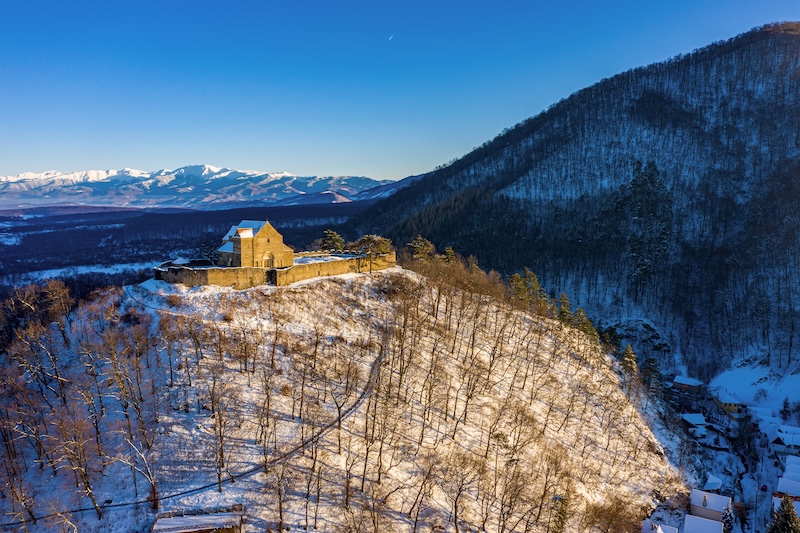
 Fortified church of Cisnădioara, Michelsberg, Kisdisznód, Sibiu county
Română: Biserica fortificată Cisnădioara, județul Sibiu, photo Adrian Arsu, 7 January 2020, CCA-SA 4.0 Int’l license.
Fortified church of Cisnădioara, Michelsberg, Kisdisznód, Sibiu county
Română: Biserica fortificată Cisnădioara, județul Sibiu, photo Adrian Arsu, 7 January 2020, CCA-SA 4.0 Int’l license. The Committee for Cultural Policy, Inc. and Global Heritage Alliance, Inc. submitted detailed comments to the Cultural Property Advisory Committee at the Department of State on July 5, 2026, concerning Romania’s request for a new cultural property agreement with the United States. A public hearing was held on July 14, 2026.
The CPIA requires evidence of current pillage, meaningful protective measures by Romania, a significant U.S. market, effective deterrence, and support for international cultural exchange. The full submission is linked here: Commentary on Romania MOU Request
Summary: Romania’s Heritage Crisis Begins at Home
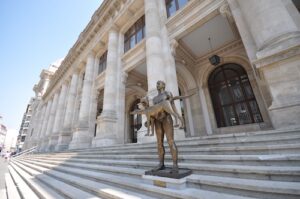
National Museum of Romanian History, Bucharest, Romania, located inside former Postal Services Palace. Shows Romanian historical artifacts from prehistoric to modern times. A medieval archaeological site was discovered under the building. Photo Jorge Láscar from Australia, 24 August 2012, CCA 2.0 Generic license.
Romania is asking the United States for broad import restrictions under the Cultural Property Implementation Act (CPIA). But the public record shows that the main threat to Romanian heritage is not an American market for its antiquities and ethnographic crafts. It is Romania’s failure to fund and protect the resources already under its control.
Romania must show that it is taking serious protective measures at home and that U.S. restrictions would address the problem. That is the central question the CPIA requires CPAC to answer.
A heritage system in decline
Romania has about 29,500 listed historic monuments, and the Council of Europe estimates that perhaps 60 percent are in bad condition. Damage is attributed not only to war and natural disaster, but also to political decisions and neglect. The same assessment reports major delays in its inventories of heritage sites and objects and lack of preventive conservation, with laws inconsistently applied because institutions lack money and qualified staff.
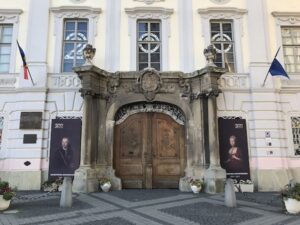
Entrance to the Brukenthal National Museum, Sibiu, photo wuppertaler, 31 July 2017, CCA-SA 4.0 Int’l license.
Some heritage organizations have lost between one-third and one-half of their personnel. Experienced specialists have retired or left the country without replacement, while young graduates have struggled for years to find work.
Romania’s museums show the same pattern. Museum employees are among the lowest-paid public-sector workers, and the European Museum Academy has described a “personnel hemorrhage” weakening professional standards.
Without curators, conservators, archaeologists, or collection managers, objects go uncatalogued, deterioration goes untreated, and institutional knowledge disappears.
Archaeology treated as an afterthought
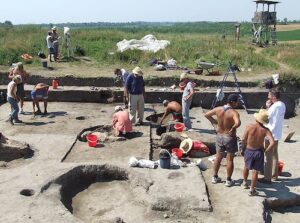
Archeological site in Județul Arad, Pecica, Romania photo HerCipri, 2 November 2009, GNU Free Documentation license.
Funding priorities are revealing. In 2021, performing arts received more than 63 percent of public cultural spending, while heritage received only 3.51 percent.
Archaeology, anthropology, and ethnography were not identified as protected priorities.
For 2026, the entire national program for archaeological research received only 1.6 million lei—about $350,000—to be divided nationwide. Individual grants were generally limited to roughly $4,000 to $10,000.
That cannot sustain excavation, conservation, publication, or site security across a country with Romania’s archaeological density.
Museums may be reinforcing the metal-detecting problem
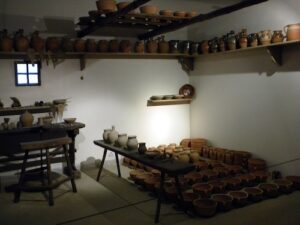
National Museum of the Romanian Peasant. Bucharest, Romania. Dedicated to the culture of rural Romania with over 100,000 exhibits. Photo Britchi V.I.Iulia, 24 September 2014, CCA-SA 4.0 Int’l license.
Underfunding has also produced a perverse reliance on metal-detector finds. As formal archaeological research has declined, some Romanian museums have increasingly depended on detectorists to add objects to collections.
The museum gains an artifact, but its archaeological context may be destroyed. A state cannot claim to protect archaeology while its institutions benefit from uncontrolled removal.
Romania also seeks broad authority over material associated with Roma, Jewish, Hungarian, German, Ukrainian, and other minority communities whose rights and property claims remain unresolved.
Roma heritage remains is unacknowledged
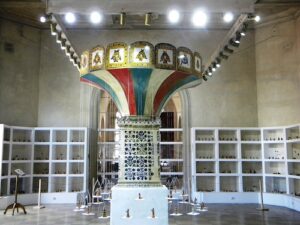
National Museum of the Romanian Peasant. Photo Britchi V.I.Iulia, 24 September 2014, CCA-SA 4.0 Int’l license.
Roma people were enslaved in the Romanian principalities for five centuries, yet that history remains inadequately recognized, almost invisible in museums and expositions of heritage. Romania adopted legislation in 2023 establishing a National Museum of Roma History and Culture, but the museum had still not become a functioning institution.
One of the country’s largest minority communities therefore remains without a permanent national museum devoted to its history, persecution, and cultural contributions.
Jewish heritage remains vulnerable
Jewish communities in Romania were devastated by the Holocaust, communist confiscation, and mass emigration. Many synagogues, cemeteries, ritual objects, and community buildings remain in places with only small Jewish populations.
In Timișoara, for example, the Jewish community numbers only about 600, and observers have warned that its cultural and architectural legacy is at risk.
Jewish heritage cannot automatically be treated as state property simply because it is located within Romania’s modern borders. It may belong to families, congregations or diaspora institutions whose histories include confiscation. Such objects should never be included under import restrictions.
Thousands of confiscated Christian religious properties remain unrestored
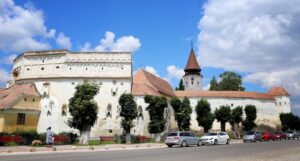
The Prejmer fortified church is a Lutheran fortified church in Prejmer (Tartlau), Brașov County, in the Transylvania region of Romania. Photo by “Neighbor’s goat,” 13 July 2014, CCA-SA 3.0 Romania license.
Romania’s record on Christian religious-property restitution is equally troubling.
A 2025 report cited in the submission states that Romania has failed to return 16,430 properties confiscated from religious denominations during the communist period. Only 17.49 percent of claims had received favorable decisions.
The affected communities include the Roman Catholic, Hungarian Reformed, Lutheran, Unitarian, Greek Catholic, Jewish, and Romanian Orthodox denominations.
These properties included schools, hospitals, and libraries—not merely churches. Their loss damages the ability of minority communities to preserve language, religion, and collective memory.
The restitution system places heavy evidentiary burdens on claimants even when the government holds the confiscation records. It has been criticized for unconscionable delay, political influence, and official harassment. Some properties have reportedly been re-nationalized after being returned.
Of 2,559 claims filed by the four historic Hungarian churches, only 755 properties had been returned. More than 57 percent remained unrestituted.
Prominent cases—including the Batthyáneum Library, the Székely Mikó Protestant High School, and the Wesselényi Reformed High School—show how restitution disputes can continue for decades, lead to re-nationalization, or expose minority representatives and church leaders to criminal proceedings.
These are not distant communist-era grievances. They are continuing human rights failures.
The priority should be reform at home

Jan van Eyck, Portrait of a Man with a Blue Chaperon (1430–1433). Brukenthal National Museum, Sibiu, Transylvania, Romania, CCA-SA 4.0 Int’l license.
Romania’s cultural heritage needs protection. The government should first demonstrate that it can preserve what it already controls. But the evidence shows that the most urgent threats are underfunding, disappearing expertise, neglected monuments, and inadequate archaeological research. This requires paying museum professionals adequately and ending practices that reward destructive metal detecting. It also means completing Christian religious-property restitution, supporting endangered Jewish heritage, and establishing a real, adequately funded National Museum of Roma History and Culture.
The CPIA should not reward Romania’s failures with sweeping U.S. restrictions. U.S. import restrictions coming from Washington will not repair Romania’s heritage system. Adequate funding, professional training and accountability, and respect for minority ownership will.
See the full commentary: Commentary on Romania MOU Request