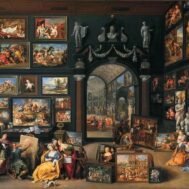
The British Museum's display of Benin Bronze plaques, photo courtesy Mike Wells.
 The Committee for Cultural Policy, Inc. and Global Heritage Alliance, Inc. submitted detailed comments to the Cultural Property Advisory Committee at the Department of State on July 5, 2026, concerning renewal of the U.S.–Nigeria cultural property agreement. A public hearing was held on July 14, 2026. What follows is a brief summary of the principal facts and issues; the full submission, addressing the CPIA’s requirements, is linked here as a PDF: Commentary on Nigeria MOU Renewal Request
Nigeria Cannot Protect Heritage It Cannot Account For
Nigeria is seeking another five years of sweeping U.S. import restrictions under the Cultural Property Implementation Act. But the record since the current agreement took effect does not show stable, transparent stewardship of Nigerian cultural heritage. It shows political interference, contested ownership, museum disorder, missing public inventories, inadequate security, and the transfer of nationally significant artifacts to an unelected hereditary ruler.
CPAC’s basic question should be straightforward: has Nigeria protected and responsibly managed the heritage already returned to it? The evidence says no.
National heritage was transferred to one private ruler

Screenshot from Bee TV November 5, 2025 Protest over opening of MOWAA.
The Nigerian government’s most serious failure is former President Muhammadu Buhari’s 2023 declaration granting ownership of all repatriated Benin artifacts to the Oba of Benin. Objects returned by foreign museums and collectors in the name of Nigeria’s national patrimony and public benefit were placed under the control of one private, unelected hereditary ruler. The Oba can determine whether the objects are exhibited, studied, published, loaned, even sold, or made accessible at all. This was not a minor administrative adjustment. It overturned assurances of national ownership and displaced Nigeria’s public museum authority. Returned objects became caught between the National Commission for Museums and Monuments, the Oba’s palace, the Edo State government, and internationally supported museum projects.
The transfer also raises profound historical concerns. The Oba is the hereditary successor to a royal dynasty deeply involved in the Atlantic slave trade. Imported brass manillas associated with that trade became raw material for many Benin works—objects some descendants of enslaved Africans have called “blood metal.” Yet the palace has not meaningfully acknowledged that history. The international public, including descendants of enslaved Africans, has a legitimate interest in how these objects are held and displayed. Nigeria’s decision to give one hereditary ruler comprehensive ownership and control should have triggered suspension of the agreement, not routine renewal.
Nigeria’s museum system is in open conflict

The excavation in progress at Benin City. The MOWAA is now deprived of its land title. Photo copyright: Caleb Folorunso et al. Courtesy MOWAA Archaeology Project.
The crisis surrounding the Museum of West African Art in Benin City demonstrates how unstable the system has become. At the museum’s official opening in November 2025, protesters aligned with the Oba forced their way into the building, insulted guests, and accused the institution of attempting to seize the Oba’s artifacts. Police had to evacuate Nigerian and international visitors, donors, and diplomats.
The conflict did not end at the museum doors. Political opponents described the project as a theft of Edo heritage, public land, donor funding, and the “King’s jewels.” Immediately after the opening crisis, the Edo State governor announced the revocation of the museum’s land title—even though the institution had been built with substantial international support.
This is not accountable museum governance. It is a struggle among royal, state, federal, and institutional interests over ownership, land, money, and control.
Nigeria, Africa’s wealthiest nation, is asking U.S. Customs to protect Nigerian national patrimony while its own government cannot establish who owns the country’s most famous artifacts, where they should be held, or which institution has authority to display them.
Returned objects cannot be reliably tracked
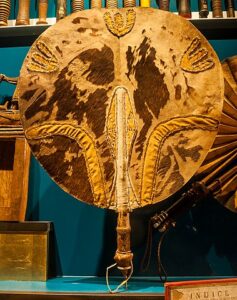
Ezuzu fan from Benin of hide and goatskin, probably 19th C date. 966, nn3171, returned to Nigeria, Photo by Mike Peel, Horniman Museum and Gardens, 21 February 2010. CC-BY-SA-4.0.
Hundreds of artifacts have physically returned to Nigeria. Transfers of legal title involving objects still held abroad or temporarily on loan reportedly include more than a thousand additional works.
Yet Nigeria has no authoritative and current public inventory showing:
- which objects have been returned and which remain abroad after title transfer;
- who legally owns it and who has custody;
- whether it is on display, in storage, or on loan; and
- whether it is controlled by the national commission, a state institution, a museum, or the Oba.
Some objects previously returned by major American museums do not appear on the Digital Benin website. Nor do all objects known to have moved through Nigerian museum custody. This lack of documentation is indefensible. Before Nigeria asks the United States to seize or detain cultural objects at the border, it should be able to identify and track the internationally prominent artifacts already returned to it.
Without a verifiable inventory, there is no meaningful accountability. Objects can be misplaced, privately transferred, removed from public view, or subjected to competing ownership claims without the public knowing.
Museum objects have been treated as political property
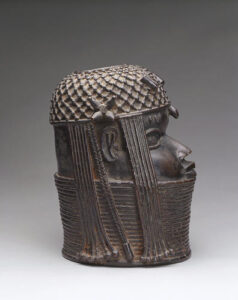
Benin bronze head of an oba or king, circa 1650. Presented to Queen Elizabeth II by General Yakubu Gowon, Head of the Federal Military Government of Nigeria, during his State Visit to the United Kingdom, 12-15 June 1973. Courtesy Royal Collection Trust.
Nigeria’s history provides disturbing examples of government officials treating museum collections as assets they can personally control. In 1973, President General Yakubu Gowon reportedly wanted to give Queen Elizabeth II a copy of a sixteenth-century head from the National Museum. When the replica was considered unsatisfactory, the original museum object was removed and presented instead. The Queen apparently believed for decades that she had received a copy.
There have also been reports of objects entering the international market after museum “duplicates” were transferred from the British Museum to Nigeria in the mid-twentieth century. Some were later acquired by foreign museums including New York’s Metropolitan Museum and eventually “returned” to Nigeria again.
These episodes expose the consequences of weak inventories, opaque deaccession practices, political interference, and poor chain-of-custody controls. They are not evidence of the professional, transparent stewardship needed to justify broader U.S. enforcement on Nigeria’s behalf.
Import restrictions do not address Nigeria’s real problems
Nigeria’s heritage faces genuine threats. Museums are underfunded. Sites and monuments suffer from development pressure or gross neglect. Museum custody is contested. Public inventories are incomplete. Returned artifacts are subject to conflicting federal, state, institutional, and royal claims. None of these problems is solved by restricting broad categories of Nigerian objects in the United States.
The current Designated List covers vast categories of archaeological and ethnological material, including objects made across many centuries by Edo, Yoruba, Hausa, Benin, and other peoples. It can also capture modern “Benin-style” works produced by contemporary Nigerian craftsmen for sale. This is not a focused response to documented current looting for an American market. It is a sweeping cultural embargo.
Nigeria needs accountability before renewed restrictions
Nigeria’s heritage deserves meaningful support. The United States should help fund inventories, museum security and staff training, archaeological research, and public education. It should encourage lawful loans and require a complete public database of all returned objects and title transfers.
But CPAC should not recommend renewal while Nigeria cannot account for returned artifacts, maintain stable museum governance, or guarantee public ownership and access.
At a minimum, any continued agreement should be narrow and conditional. If specific types of objects subject to looting today are identified, they should be subject to return. Meanwhile, if Nigeria wishes renewal of a U.S. agreement, it should be required to publish inventories, identify the ownership and location of returned objects, provide law-enforcement data, ensure secure public custody, and resolve the Oba’s extraordinary private control over national heritage.
Nigeria cannot credibly demand that the United States protect cultural property that Nigeria itself has transferred, politicized, and failed to track.
Read the full commentary: Commentary on Nigeria MOU Renewal Request